Seborrheic Keratosis vs. Wart: A Comprehensive Guide to Telling Them Apart in 2025
Have you ever noticed a new bump or growth on your skin and wondered, "What exactly is this?" It's a common concern, especially as we age. Among the many types of skin lesions, seborrheic keratosis and warts are two of the most frequently encountered. While they might appear similar to the untrained eye, understanding the fundamental differences between seborrheic keratosis vs wart is crucial for proper identification, management, and peace of mind. This comprehensive guide, updated for 2025, will delve into the distinct characteristics, causes, symptoms, and treatment options for both conditions, empowering you with the knowledge to distinguish between them and make informed decisions about your skin health.
Navigating skin concerns can be daunting, but with accurate information, you can approach them confidently. While neither seborrheic keratosis nor warts are typically life-threatening, knowing which one you might have can prevent unnecessary worry or ineffective self-treatment. This article will meticulously break down the nuances, helping you understand why professional diagnosis is often the best course of action.
Key Takeaways
Distinct Causes: Warts are caused by the human papillomavirus (HPV) and are contagious, while seborrheic keratoses are non-viral, non-contagious benign growths linked to aging and genetics.
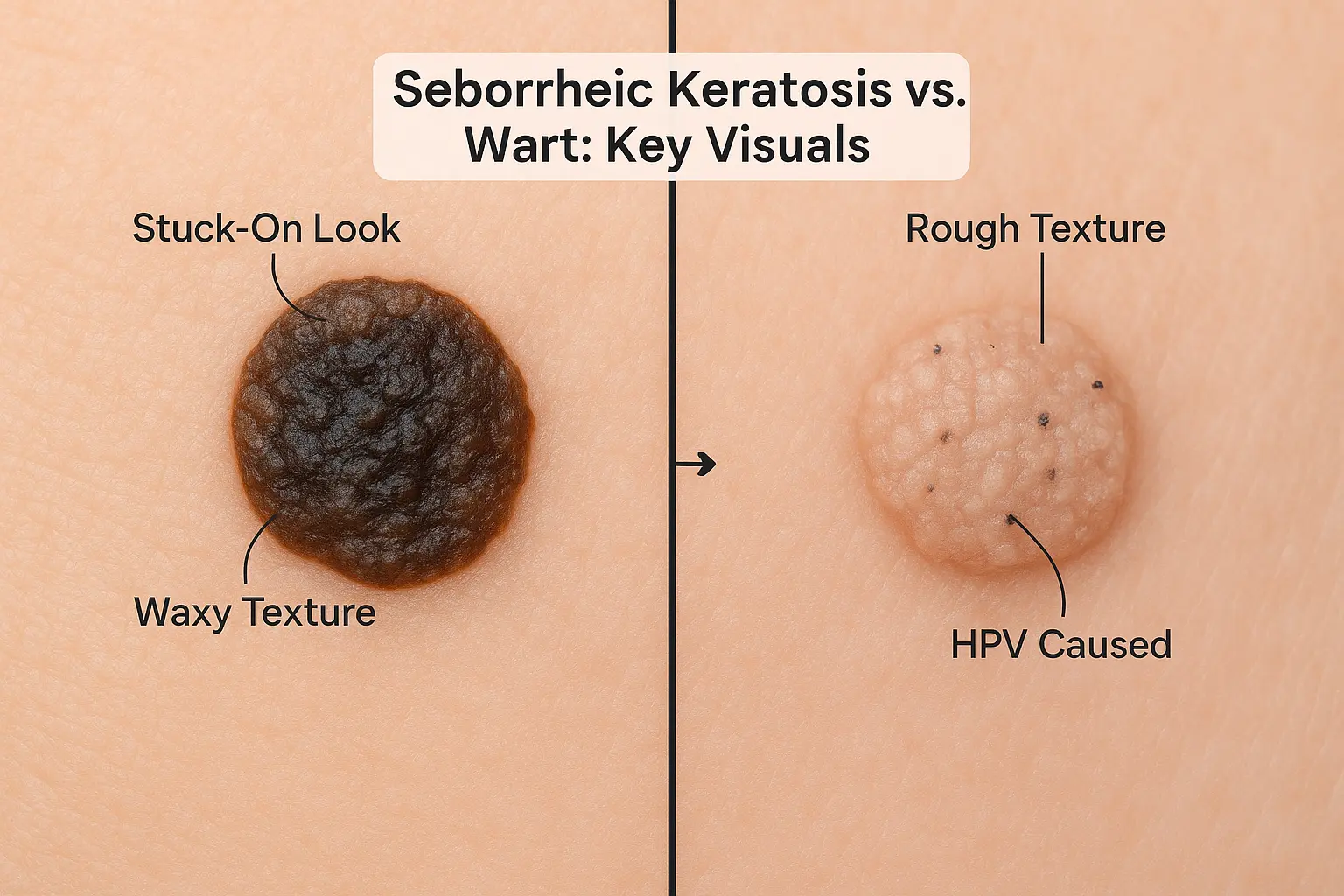
Appearance Matters: Seborrheic keratoses often have a 'stuck-on' appearance with a waxy, scaly, or rough texture and well-defined borders. Warts tend to be rough, fleshy, and can resemble a cauliflower, sometimes with small black dots.
Location and Growth: Seborrheic keratoses commonly appear on the face, neck, chest, and back. Warts can appear almost anywhere but are frequently found on hands, feet, and genitals. Seborrheic keratoses grow slowly, while rapid growth of any lesion warrants immediate medical attention.
Treatment Discrepancy: Over-the-counter wart removers (e.g., salicylic acid) are ineffective and potentially harmful for seborrheic keratoses. Professional removal is recommended for seborrheic keratoses, while some warts may resolve on their own or respond to home remedies.
Benign Nature: Both are generally benign. However, seborrheic keratoses are not cancerous and do not become cancerous. Warts are also usually harmless, but certain HPV types can cause genital warts which are linked to a risk of certain cancers.
Understanding Seborrheic Keratosis: The 'Stuck-On' Growth
Seborrheic keratoses are among the most common non-cancerous skin growths in adults, particularly becoming more prevalent in middle-aged and older individuals. Often described as appearing as if they were "stuck-on" the skin, these benign lesions are a natural part of skin aging. They are not true warts and, importantly, are not caused by a virus. Approximately 3 million new cases are diagnosed annually in the United States, highlighting their widespread occurrence [1].
What Exactly Is Seborrheic Keratosis?
Seborrheic keratosis (SK), sometimes referred to as 'senile warts' or 'basal cell papillomas' (though these terms are less accurate and can be misleading), is a benign epithelial tumor. This means it's a non-cancerous growth originating from the outermost layer of the skin. Unlike actual warts, which are caused by a viral infection, seborrheic keratoses develop spontaneously and are not infectious or contagious [2].
Did you know? 🤔 Seborrheic keratoses are so common that almost everyone will develop at least one in their lifetime, especially after the age of 40!
Causes and Risk Factors for Seborrheic Keratosis
The exact cause of seborrheic keratoses is not fully understood, but several factors are believed to contribute to their development:
Aging: This is the most significant risk factor. As people get older, the likelihood of developing SKs increases. They are very common in individuals over 50.
Genetics: There is often a familial predisposition, meaning if your parents or close relatives have many seborrheic keratoses, you are more likely to develop them too.
Sun Exposure: While not directly caused by sun exposure in the same way as sunspots, SKs often appear on sun-exposed areas of the body, suggesting a possible link or exacerbating factor.
Friction: Some theories suggest that friction or chronic irritation in certain areas might contribute to their formation, although this is less definitively proven.
It is crucial to emphasize that seborrheic keratoses are not caused by viral, bacterial, or fungal infections. This is a key differentiator when considering seborrheic keratosis vs wart.
Appearance and Characteristics of Seborrheic Keratosis
One of the most distinctive features of a seborrheic keratosis is its appearance. They can vary in color, size, and texture, but generally share some common traits:
Color: They typically appear as brown, black, or tan growths. Sometimes they can be yellowish or grayish.
Texture: They often have a rough, scaly, waxy, or greasy texture. They feel slightly elevated and can sometimes look crusted or like a patch of candle wax has dripped onto the skin. The texture is due to an overgrowth of keratin, the same protein found in hair and fingernails.
Shape and Borders: They usually have well-defined, round or oval borders, giving them that characteristic "stuck-on" look. They can range from very small, flat spots to larger, raised lesions several centimeters in diameter.
Growth: Seborrheic keratoses exhibit slow, gradual growth over time. Any rapid growth in a skin lesion should always prompt a medical evaluation to rule out more serious conditions.
Location: They can appear almost anywhere on the body, except for the palms of the hands and the soles of the feet. Common locations include the face, neck, chest, back, scalp, and under the breasts. They often appear in clusters, unlike melanoma which typically presents as a single lesion [3].
When to Seek Medical Advice for Seborrheic Keratosis
While seborrheic keratoses are benign, it's always wise to consult a dermatologist if you have a new skin growth, or if an existing one changes in size, shape, or color, or starts to bleed, itch, or become painful. This is especially important to rule out more serious conditions like melanoma, which can sometimes mimic the appearance of an SK. A dermatologist can differentiate between the two through visual inspection, dermoscopy, or in some cases, a biopsy.
Treatment Options for Seborrheic Keratosis
Seborrheic keratoses generally do not require treatment unless they become irritated, bleed, itch, or if their appearance bothers the individual. It's important to know that wart removers containing salicylic acid are ineffective for seborrheic keratoses and can potentially cause damage to the surrounding healthy skin, leading to scarring and further irritation. Home treatment and self-removal attempts are strongly discouraged as they can result in permanent scarring, infection, or skin discoloration [4]. Professional removal methods are safe and effective:
Cryotherapy: This is the most common method, involving freezing the lesion with liquid nitrogen. The growth usually blisters and then falls off within a week or two.
Curettage: The growth is scraped off the skin using a special instrument, sometimes after numbing the area.
Electrocautery: The lesion is burned off using an electric current.
Shave Excision: For thicker lesions, a dermatologist may shave off the growth with a surgical blade.
Laser Therapy: Various lasers can be used to remove seborrheic keratoses, particularly for cosmetic concerns.
Choosing the right treatment depends on the size, location, and number of lesions, as well as patient preference. A discussion with a dermatologist will help determine the best approach.
Delving into Warts: The Viral Invader
Warts are common skin growths caused by a viral infection. Unlike seborrheic keratoses, warts are contagious and result from infection with the human papillomavirus (HPV). There are more than 100 types of HPV, and different types tend to cause warts in different parts of the body. Understanding the viral origin is key to distinguishing seborrheic keratosis vs wart.
What Exactly Is a Wart?
A wart is a small, rough growth on the skin or a mucous membrane, caused by a viral infection, specifically from the human papillomavirus (HPV). The virus causes an overgrowth of cells in the outer layer of the skin, leading to the characteristic bumpy texture. Warts are extremely common, especially in children and young adults, and can affect anyone.
Interesting Fact: The term "wart" comes from the Old English word "wearte," meaning "a protuberance, excrescence."
Causes and Risk Factors for Warts
The sole cause of warts is infection with the human papillomavirus (HPV). Here's how they spread and who is at risk:
HPV Infection: Warts are the result of direct contact with the HPV virus. The virus typically enters the skin through tiny cuts or breaks in the skin.
Contagion: Warts are contagious and can spread from person to person through direct skin-to-skin contact, or indirectly through shared items like towels, razors, or communal surfaces (e.g., locker room floors). They can also spread to other parts of your own body (autoinoculation).
Weakened Immune System: Individuals with compromised immune systems (e.g., due to illness or medication) are more susceptible to developing warts and may find them harder to clear.
Skin Trauma: Habits like nail-biting, cuticle picking, or shaving can create small openings in the skin, making it easier for HPV to enter.
Age: Warts are more common in children and teenagers, possibly due to their active lifestyles and frequent minor injuries, as well as developing immune systems.
Appearance and Characteristics of Warts
Warts can present in various forms depending on the type of HPV and their location on the body. However, they generally have certain features in common:
Texture: They are typically rough to the touch, often described as feeling like a solid blister or a small cauliflower.
Color: Warts are often flesh-colored, white, pink, or tan. Sometimes they can have tiny black dots within them, which are clotted blood vessels (often called "seed warts").
Shape: They can be round or irregular, raised, and firm. Different types of warts have distinct shapes:
Common Warts: Rough, grainy, raised bumps, usually on fingers, hands, and around nails.
Plantar Warts: Grow inward on the soles of the feet, often flat due to pressure, and can be painful. They may have black dots.
Flat Warts: Small, smooth, flat-topped lesions, often appearing in clusters on the face, arms, or legs.
Filiform Warts: Long, thin, finger-like projections, usually on the face, especially near the eyes, mouth, or nose.
Genital Warts: Soft, fleshy, often cauliflower-like growths found in the genital or anal area.
Growth: Warts can grow relatively quickly, or remain stable in size for a long time.
Location: Warts can appear almost anywhere on the skin. Common sites include hands, feet, fingers, face, and genitals.
Wart Visual Cues | Characteristic | Description | | :---------------- | :------------------------------------------------------------------------ | | Color | Flesh-colored, white, pink, tan; sometimes with black dots | | Texture | Rough, grainy, bumpy, cauliflower-like, firm | | Appearance | Raised, sometimes flat (plantar), can be in clusters | | Growth Rate | Variable | | Contagious? | Yes (via HPV) | | Cause | Human papillomavirus (HPV) infection |
When to Seek Medical Advice for Warts
While many warts are harmless and may eventually disappear on their own (especially in children, as their immune systems learn to fight the virus), it's important to consult a healthcare professional in several situations:
Pain or Discomfort: If a wart is painful, bleeding, or interfering with daily activities.
Appearance Changes: If the wart changes color, grows rapidly, or looks unusual.
Warts on the Face or Genitals: These areas require careful treatment to avoid scarring and to address the specific type of HPV in the case of genital warts.
Compromised Immune System: If you have a weakened immune system, warts may be more persistent and widespread.
Uncertainty: If you are unsure whether a growth is a wart or something else, especially if you are trying to differentiate between seborrheic keratosis vs wart.
Persistence: If home treatments have been unsuccessful or the wart keeps recurring.
Treatment Options for Warts
Many warts can be treated at home or by a doctor. The goal of treatment is to destroy the wart, stimulate the immune system to fight the virus, or both.
Over-the-Counter (OTC) Treatments:
Salicylic Acid: Available in various strengths (liquids, gels, patches). It works by dissolving the layers of the wart gradually. This is a common and effective home treatment for common warts but should not be used for seborrheic keratoses.
Freezing Kits (Cryotherapy): OTC kits use a colder substance than liquid nitrogen but work on the same principle of freezing the wart tissue.
Professional Treatments (Dermatologist):
Cryotherapy: Dermatologists use liquid nitrogen, which is much colder and more effective than OTC freezing kits.
Cantharidin: A chemical applied to the wart that causes a blister to form underneath, lifting the wart off the skin.
Immunotherapy: Medications that stimulate the body's immune system to fight the HPV virus.
Excision/Curettage: Surgical removal of the wart.
Laser Treatment: Uses an intense beam of light to burn and destroy wart tissue.
Bleomycin: An anti-cancer drug injected into the wart to kill the virus.
Imiquimod: A prescription cream that boosts the immune system to fight off the virus.
For more information on managing financial aspects related to healthcare or home improvements, you can explore resources on mortgage planning, such as understanding conventional mortgages or even debt consolidation mortgages if medical expenses become a concern.
Seborrheic Keratosis vs. Wart: Head-to-Head Comparison
Now that we've explored each condition individually, let's put seborrheic keratosis vs wart side-by-side to highlight their key differences. This comparative approach will solidify your understanding and help in initial identification, though professional diagnosis is always recommended.
Etiology and Contagion: The Core Difference
This is perhaps the most critical distinction between the two skin lesions.
Seborrheic Keratosis:
Cause: Not viral. Linked to aging, genetics, and possibly sun exposure.
Contagion: Absolutely not contagious. They do not spread from person to person.
Wart:
Cause: Caused by infection with the human papillomavirus (HPV).
Contagion: Contagious. Can spread through direct contact or indirectly.
Appearance and Morphology: Visual Cues for Seborrheic Keratosis vs Wart
While both are elevated skin growths, their specific appearances are distinct.
FeatureSeborrheic Keratosis (SK)WartOverall Look"Stuck-on" appearance, often looks like a dab of waxFleshy, rough, bumpy, often cauliflower-likeTextureWaxy, greasy, scaly, rough, crumbly, elevatedRough, grainy, firm, sometimes smooth (flat warts)ColorTan, brown, black, yellowish, grayishFlesh-colored, white, pink, tan, sometimes darker; often with black dotsBordersWell-defined, often sharpLess distinct borders, often blends into surrounding skin graduallySurface DetailMay have tiny keratin plugs (comedo-like openings)Tiny black dots (thrombosed capillaries) often visible, especially when scraped or paredLocationFace, neck, chest, back, scalp (anywhere except palms/soles)Hands, feet, fingers, face, genitals (can be almost anywhere)NumberOften appear in clusters, multiple lesions commonCan be single or multiple, may spread
Growth Patterns and Evolution
Seborrheic Keratosis: Characterized by slow, gradual growth. They typically get larger and thicker over months or years. Rapid growth is unusual and warrants medical evaluation.
Wart: Growth can be variable. Some may appear quickly and grow to a certain size, while others grow slowly. They can spontaneously resolve, particularly in younger individuals.
Malignancy Potential: Are They Cancerous?
This is a significant area of difference and a common concern for patients.
Seborrheic Keratosis: These are benign skin tumors and do not become cancerous. They have significantly different characteristics from melanoma, including texture, shape, and growth rate [5].
Wart: Warts are generally harmless and non-cancerous. However, certain types of HPV, particularly those causing genital warts, are associated with an increased risk of certain cancers (e.g., cervical, anal, oral). It's important to note that most common warts (on hands/feet) are not linked to cancer.
Knowing which lesion you have determines the appropriate treatment.
Seborrheic Keratosis:
Requires professional removal methods (cryotherapy, curettage, electrocautery, shave excision, laser).
Home remedies and over-the-counter wart removers are ineffective and potentially harmful. They can cause irritation, scarring, and skin damage without removing the SK.
Wart:
Can sometimes resolve spontaneously (especially in children).
Responds to over-the-counter treatments containing salicylic acid or freezing kits.
Professional treatments include stronger cryotherapy, prescription creams, surgical removal, or laser therapy.
The Importance of Professional Diagnosis
Given the visual similarities that can sometimes exist, especially in their early stages, and the distinct treatment pathways, professional diagnosis by a dermatologist is highly recommended. A dermatologist has the expertise to visually differentiate between these conditions, often using a dermatoscope – a handheld device that magnifies skin lesions. If there is any doubt, a biopsy can be performed to definitively identify the nature of the growth.
For those navigating complex financial decisions, similar to choosing the right skin treatment, having expert guidance is invaluable. Professionals in mortgage services, like those at Everything Mortgages, provide essential advice. You might even find it beneficial to consult with specific mortgage agents such as Anahita Shamei or Brijesh Vora if you need specialized financial advice to support potential medical costs or other life planning.
Advanced Diagnostic Techniques
While a skilled dermatologist can often distinguish between seborrheic keratosis and warts with a visual inspection, there are advanced techniques that aid in difficult or ambiguous cases. These methods ensure accurate diagnosis, which is paramount for appropriate patient management and reassurance.
Dermoscopy
Dermoscopy is a non-invasive diagnostic technique that uses a handheld device (dermatoscope) to magnify and illuminate skin lesions. It allows dermatologists to visualize structures and patterns that are not visible to the naked eye.
For Seborrheic Keratosis: Dermoscopy often reveals characteristic features such as:
Keratin pseudocysts (milia-like cysts): Small, round, white-to-yellowish structures that appear as small 'pearls' under magnification. These are highly specific to SKs.
Comedo-like openings: Dark, pseudofollicular openings that resemble blackheads.
Fissures and grooves: Irregular surface patterns.
Moth-eaten borders: A scalloped or irregular edge pattern.
For Warts: Dermoscopy typically shows:
Thrombosed capillaries (black dots/red dots): Small, punctate red or black dots representing clotted blood vessels. These are a hallmark of warts.
Papillary surface: A cobblestone or finger-like projection pattern reflecting the rough surface.
Absence of keratin pseudocysts and comedo-like openings.
The ability to differentiate these microscopic features with dermoscopy significantly reduces the need for biopsies, offering a quicker and less invasive diagnosis.
Skin Biopsy
When dermoscopy is inconclusive, or if there is any suspicion of malignancy (e.g., if a lesion exhibits features atypical for an SK or a wart), a skin biopsy is performed. This involves removing a small piece of the lesion for microscopic examination by a dermatopathologist.
For Seborrheic Keratosis: Histopathological examination of an SK typically shows an acanthotic (thickened) epidermis with a proliferation of basaloid cells, hyperkeratosis (thickening of the stratum corneum), and often the presence of horn cysts (keratin pseudocysts).
For Warts: A biopsy of a wart will show papillomatosis (finger-like projections), acanthosis, and importantly, koilocytosis (cytopathic effect of HPV characterized by enlarged keratinocytes with clear halos around small, dark nuclei). This cellular change is pathognomonic for HPV infection.
A biopsy provides a definitive diagnosis and is the gold standard when diagnostic certainty is required.
The Psychological Impact and Cosmetic Concerns
Beyond the medical distinctions, both seborrheic keratoses and warts can have a significant psychological and cosmetic impact on individuals. While neither is usually a serious health threat, their appearance can cause distress, self-consciousness, and even anxiety.
Impact of Seborrheic Keratosis
Cosmetic Disfigurement: Seborrheic keratoses, especially when large, dark, numerous, or located on visible areas like the face or neck, can be perceived as cosmetically unappealing. People may feel self-conscious about their appearance, leading to a desire for removal even if they are medically harmless.
Irritation and Discomfort: While not inherently painful, SKs can become irritated, itchy, or inflamed, particularly if they rub against clothing or jewelry. This chronic irritation can impact quality of life.
Cancer Fear: Despite being benign, the sudden appearance or change in a skin lesion can understandably trigger fears of skin cancer. The 'stuck-on' appearance can sometimes be confused with melanoma, leading to significant anxiety until a definitive diagnosis is made.
Bleeding: If scratched or traumatized, SKs can bleed, which can be alarming and messy.
Impact of Warts
Social Stigma: Warts, particularly common warts on the hands or face, can carry a social stigma due to their visible nature and the common knowledge that they are contagious. This can lead to self-consciousness and avoidance of social interactions.
Embarrassment: People with warts may feel embarrassed or ashamed, especially if they are numerous or in prominent locations.
Fear of Spreading: The contagious nature of warts often causes concern about spreading them to family members, friends, or other parts of one's own body.
Pain and Functional Impairment: Plantar warts on the feet can be extremely painful, making walking difficult and impacting daily activities. Warts near nails can also cause discomfort and interfere with fine motor skills.
Genital Warts: These carry a significant psychological burden due to their association with sexually transmitted infections and the increased risk of certain cancers. The emotional distress can be substantial, impacting relationships and self-esteem.
Both conditions, therefore, highlight the importance of not only accurate diagnosis but also compassionate care that addresses the patient's emotional and psychological well-being. A consultation with a healthcare provider can help alleviate fears and provide effective solutions. Understanding the distinctions between seborrheic keratosis vs wart can be the first step towards seeking appropriate care and managing these concerns effectively. For other important life decisions, such as securing your future, it is always a good idea to seek expert advice, whether it's understanding the 2025 Canadian housing market outlook or getting the best private mortgage rates in Ontario for 2025.
Prevention and Long-Term Management
While it's not always possible to prevent skin growths entirely, understanding their causes can help in managing them and minimizing their impact. The strategies for prevention and long-term management differ significantly for seborrheic keratosis vs wart.
Preventing Seborrheic Keratosis
Since seborrheic keratoses are primarily linked to aging and genetics, complete prevention is difficult. However, some measures may help mitigate their development or manage existing ones:
Sun Protection: Although not a direct cause, chronic sun exposure might play a role. Regular use of broad-spectrum sunscreen (SPF 30+), wearing protective clothing, and seeking shade can help maintain overall skin health and potentially reduce the incidence of some skin growths.
Regular Skin Checks: Self-examination of your skin monthly and annual professional skin checks by a dermatologist can help monitor existing lesions and identify new ones early. Early identification ensures peace of mind and allows for timely intervention if any lesion is concerning.
Moisturize Skin: Keeping the skin well-hydrated may contribute to overall skin health, though its direct impact on preventing SKs is not strongly established.
Avoid Irritation: If an SK is in an area of friction (e.g., under a bra strap), try to minimize irritation to prevent it from becoming inflamed or itchy.
Preventing Warts
Warts, being viral in origin, can be prevented by reducing exposure to the human papillomavirus (HPV).
Avoid Direct Contact: Do not touch other people's warts, and avoid sharing personal items like towels, razors, or nail clippers.
Protect Your Feet: Wear sandals or flip-flops in public showers, locker rooms, and around swimming pools to prevent plantar warts.
Practice Good Hygiene: Wash hands regularly, especially after touching public surfaces or if you suspect exposure to HPV.
Avoid Picking Warts: Do not pick at your own warts, as this can spread the virus to other parts of your body. If you have a wart, keep it covered with a bandage.
Boost Immune System: A healthy lifestyle, including a balanced diet, regular exercise, and adequate sleep, can support a strong immune system, which helps the body fight off viral infections like HPV.
HPV Vaccination: For certain types of HPV (those linked to genital warts and associated cancers), vaccination is available and highly effective. This is a crucial preventive measure, particularly for young individuals.
Avoid Skin Trauma: Minimize cuts and abrasions on the skin, as these provide entry points for the virus. If you bite your nails or pick cuticles, try to break these habits.
Long-Term Management and Outlook
For Seborrheic Keratosis: Once removed, SKs generally do not recur in the exact same spot. However, individuals prone to SKs will likely develop new ones over time in other areas. They are benign and pose no health risk, so management is often driven by cosmetic concerns or irritation. Regular skin checks are important to monitor for new growths and to differentiate them from more concerning lesions.
For Warts: Warts can be persistent and may recur, even after successful treatment, because the HPV virus can remain dormant in the skin. The body's immune system eventually learns to fight off the virus, which is why warts often disappear on their own over months or years, especially in children. For adults, warts may be more persistent. Repeated treatments may be necessary. For genital warts, ongoing monitoring and sometimes repeated treatments are required due to the associated health risks.
Understanding the long-term outlook for each condition reinforces the need for accurate diagnosis and tailored management. While skin growths can be a nuisance, knowing how to differentiate between seborrheic keratosis vs wart is a powerful tool for proactive health management in 2025 and beyond. When considering long-term financial planning to support your health or other goals, remember that resources like everythingmortgages.ca/blog/ offer valuable insights, from credit score improvement tips to guidance on balancing mortgage and retirement savings for Canadians.
Conclusion
Distinguishing between seborrheic keratosis and warts is more than just a matter of curiosity; it's a fundamental step towards appropriate skin care and peace of mind. While both are common skin growths, their origins, characteristics, and treatment responses are distinctly different. Seborrheic keratoses are non-viral, non-contagious benign growths associated with aging, presenting with a characteristic 'stuck-on' and waxy appearance. Warts, on the other hand, are caused by the contagious human papillomavirus (HPV) and typically have a rough, fleshy texture.
This comprehensive guide, tailored for 2025, has highlighted the critical differences: from their distinct causes and contagious nature to their varied appearances and recommended treatment protocols. It's clear that while many over-the-counter options exist for warts, they are entirely inappropriate and potentially harmful for seborrheic keratoses, which require professional dermatological intervention for safe and effective removal. Moreover, understanding the benign nature of seborrheic keratosis can alleviate anxiety, while awareness of HPV-related risks for certain warts emphasizes the importance of professional medical advice.
Actionable Next Steps:
Observe Your Skin: Regularly check your skin for new growths or changes in existing ones. Pay attention to their color, shape, size, and texture.
Do Not Self-Diagnose or Self-Treat Unknown Lesions: Attempting to treat an unknown skin growth at home can lead to irritation, infection, scarring, or delay the diagnosis of a more serious condition. Avoid using wart removers on anything you suspect might be a seborrheic keratosis.
Consult a Dermatologist: If you have any new skin growth, if an existing growth changes, bleeds, itches, or causes discomfort, or if you are simply unsure whether a lesion is a seborrheic keratosis or a wart, seek professional medical advice. A dermatologist can accurately diagnose the condition through visual inspection, dermoscopy, or a biopsy, and recommend the most appropriate course of action.
Discuss Treatment Options: If removal is desired for cosmetic reasons or due to irritation, your dermatologist will discuss the safest and most effective professional treatment options for your specific condition.
Practice Prevention: For warts, practice good hygiene and avoid direct contact with infected skin. For overall skin health, protect yourself from excessive sun exposure.
Empowering yourself with knowledge about your skin is a vital part of your overall health and wellness. By understanding the critical distinctions of seborrheic keratosis vs wart, you can approach any skin concerns with confidence and ensure you receive the correct care for your unique needs.