

Discovering an unusual lump or growth around the anal area can be alarming and uncomfortable. Many people immediately worry about what they've found, often confusing two very common conditions: perianal skin tags and hemorrhoids. While both can appear in the same general area, understanding the difference between a hemorrhoid vs skin tag is crucial for proper treatment and peace of mind.
This comprehensive guide will help you distinguish between these two conditions, understand their causes, recognize their symptoms, and know when to seek professional medical care. Whether you're experiencing discomfort or simply noticed something unusual during personal hygiene, this article provides the clear, professional information you need to make informed decisions about your health.
✅ Perianal skin tags are soft, flesh-colored growths of excess skin that are painless and harmless, while hemorrhoids are swollen blood vessels that can cause pain, bleeding, and discomfort.
✅ Location and appearance are key differentiators: skin tags are typically flesh-colored and hang from the skin, whereas hemorrhoids are often purple or red and may be internal or external.
✅ Symptoms vary significantly: hemorrhoids commonly cause pain, itching, and bleeding during bowel movements, while skin tags are usually asymptomatic unless irritated by friction.
✅ Treatment approaches differ: hemorrhoids often require medical intervention and lifestyle changes, while skin tags can be safely removed for cosmetic reasons at specialized clinics.
✅ Professional diagnosis is essential: while this guide provides valuable information, only a qualified healthcare provider can definitively diagnose and recommend appropriate treatment for your specific condition.
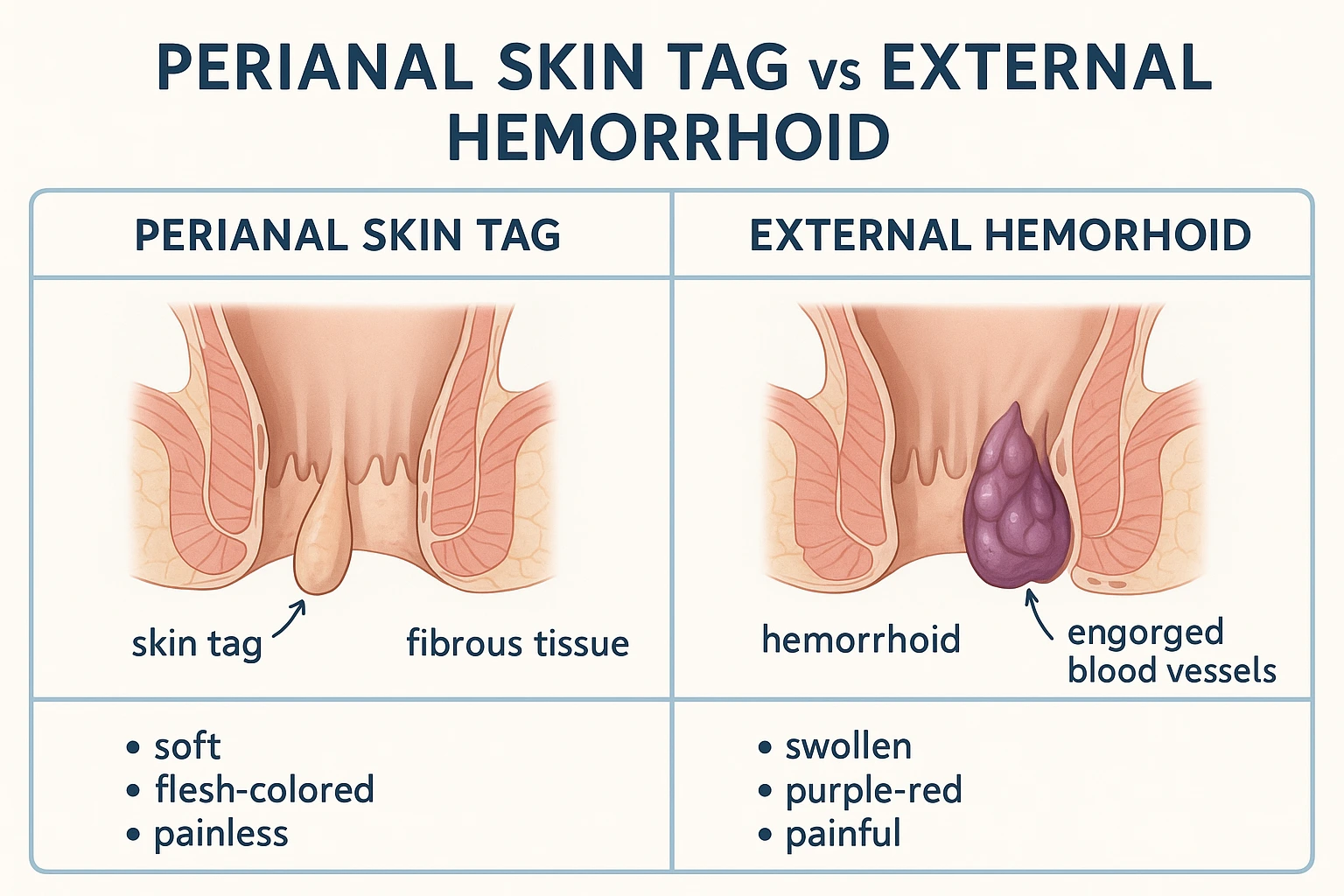
Perianal skin tags are small, soft growths of excess skin that develop around the anal opening. These benign (non-cancerous) growths are extremely common and typically pose no health risk whatsoever. They're essentially folds of skin that have formed for various reasons, creating a small protrusion that can range from a few millimeters to over a centimeter in size.
Several factors can lead to the development of skin tags in the perianal region:
Hemorrhoid Resolution: One of the most common causes of perianal skin tags is the healing process after a hemorrhoid. When a hemorrhoid shrinks back down after being swollen, it can leave behind excess stretched skin that forms a tag.
Pregnancy and Childbirth: The significant pressure and strain during pregnancy and delivery can cause skin tags to develop in the anal area. The increased blood flow and pressure in the pelvic region during these times contribute to their formation.
Chronic Constipation: Regular straining during bowel movements puts repeated pressure on the delicate skin around the anus, potentially leading to skin tag formation over time.
Inflammatory Bowel Disease (IBD): Conditions like Crohn's disease and ulcerative colitis can increase the likelihood of developing perianal skin tags due to chronic inflammation in the area[1].
Natural Aging Process: As we age, our skin loses elasticity, making it more prone to forming tags in areas where friction occurs regularly.
Genetics: Some people are simply more predisposed to developing skin tags throughout their body, including the perianal area.
Understanding what skin tags look and feel like helps distinguish them from other conditions:
FeaturePerianal Skin TagColorFlesh-colored, pink, or slightly darker than surrounding skinTextureSoft, pliable, smooth surfaceSizeTypically 1mm to 1cm (can occasionally be larger)ShapeIrregular, often pedunculated (attached by a stalk)Pain LevelGenerally painless unless irritatedBleedingRare, only if traumatizedGrowth RateStable, doesn't grow rapidly
Perianal skin tags are completely harmless from a medical standpoint. However, they can cause practical concerns such as difficulty with hygiene, irritation from clothing or wiping, and cosmetic concerns that affect confidence and comfort[2].
For those interested in professional removal of benign skin growths, specialized skin tag removal services are available at dedicated clinics that focus on minor surgical procedures.
Hemorrhoids (also called piles) are swollen, inflamed veins in the rectum and anus. Unlike skin tags, hemorrhoids involve the vascular system and can cause significant discomfort. They're one of the most common medical conditions, affecting approximately 50% of adults by age 50[3].
Understanding the different types of hemorrhoids is crucial when comparing hemorrhoid vs skin tag:
Internal Hemorrhoids: These develop inside the rectum and are usually not visible or felt. They typically don't cause pain because the rectum has few pain-sensing nerves. However, they can bleed during bowel movements and may prolapse (protrude through the anal opening).
External Hemorrhoids: These form under the skin around the anus and are the type most commonly confused with perianal skin tags. External hemorrhoids contain pain-sensing nerves and can be extremely uncomfortable, especially when thrombosed (containing a blood clot).
Prolapsed Hemorrhoids: Internal hemorrhoids that have extended through the anal opening, creating a visible, protruding mass.
Thrombosed Hemorrhoids: When a blood clot forms inside a hemorrhoid, it becomes thrombosed, causing severe pain and a hard lump that appears purple or blue.
Several factors contribute to hemorrhoid development:
Here's how hemorrhoids typically present:
FeatureExternal HemorrhoidInternal HemorrhoidColorPurple, red, or blue (especially when thrombosed)Pink to redTextureFirm to hard (when thrombosed), swollenSoft, mucus-coveredSizePea-sized to grape-sizedVariableShapeRound, bulging massUsually not visible unless prolapsedPain LevelCan be very painful, especially when thrombosedUsually painless unless prolapsedBleedingCommon, especially during bowel movementsVery common, bright red bloodGrowth RateCan swell rapidly, especially with clot formationDevelops gradually
🔴 Bright red blood on toilet paper or in the toilet bowl after a bowel movement
🔴 Pain or discomfort, especially when sitting or during bowel movements
🔴 Itching or irritation in the anal region
🔴 Swelling around the anus that may be tender to touch
🔴 A lump near the anus that may be sensitive or painful
🔴 Leakage of fecal matter due to incomplete closure
Understanding various types of skin lesions can help you better identify what you're experiencing and communicate effectively with healthcare providers.
Now that we understand each condition individually, let's directly compare hemorrhoid vs skin tag characteristics to help you identify what you might be experiencing.
Color:
Texture:
Attachment:
Pain and Discomfort:
Bleeding:
Itching:
Changes Over Time:
CharacteristicPerianal Skin TagExternal HemorrhoidPrimary CompositionExcess skin tissueSwollen blood vesselsTypical ColorFlesh-toned, pinkPurple, red, blueConsistencySoft, floppyFirm, swollenPainUsually noneCommon, can be severeBleedingRareCommonItchingMinimalFrequentChanges with PositionNo changeMay reduce when lying downResponse to PressureDoesn't changeMay become more painfulDurationPermanent unless removedCan resolve naturallyMedical RiskNoneCan lead to complications
It's important to note that perianal skin tags and hemorrhoids can exist simultaneously. In fact, as mentioned earlier, skin tags often form as a result of previous hemorrhoids. Someone who has had hemorrhoids may develop skin tags in the same area, which can make self-diagnosis even more challenging.
If you're uncertain about what you're experiencing, professional evaluation at a specialized skin care clinic can provide accurate diagnosis and appropriate treatment recommendations.
While this guide provides valuable information for understanding hemorrhoid vs skin tag differences, only a qualified healthcare provider can make a definitive diagnosis. Here's what to expect during a professional evaluation.
Your healthcare provider will begin by asking detailed questions about:
This information helps narrow down the likely diagnosis before any physical examination.
Visual Inspection: The healthcare provider will visually examine the anal area, looking for:
Digital Rectal Examination (DRE): The provider may gently insert a gloved, lubricated finger into the rectum to:
Anoscopy: For a more detailed view, a small, lighted tube (anoscope) may be inserted a few inches into the anus to visualize internal hemorrhoids or other conditions.
In some cases, particularly if there are concerning symptoms, additional diagnostic procedures may be recommended:
Sigmoidoscopy or Colonoscopy: If there's unexplained bleeding, these procedures allow visualization of the entire colon to rule out other conditions like polyps or colorectal cancer.
Biopsy: Rarely, if a growth looks atypical or suspicious, a small tissue sample may be taken to rule out malignancy. This is uncommon with typical skin tags or hemorrhoids but may be necessary if the appearance is unusual.
Healthcare providers will also consider other possible conditions that can appear similar:
Understanding the differences between various skin conditions can help you communicate more effectively with your healthcare provider about your symptoms.
While online resources and guides are helpful for general understanding, self-diagnosis can be misleading and potentially dangerous. What appears to be a harmless skin tag could be something requiring treatment, and what seems like a hemorrhoid might be a more serious condition.
Seek professional medical evaluation if you experience:
Early diagnosis and appropriate treatment prevent complications and provide peace of mind.
Perianal skin tags are medically harmless and don't require treatment unless they cause symptoms or cosmetic concerns. However, many people choose to have them removed for practical or aesthetic reasons.
If a perianal skin tag isn't causing problems, the "watch and wait" approach is perfectly acceptable:
When to Consider This Approach:
Managing Minor Irritation:
When removal is desired, several safe and effective options are available:
Surgical Excision:
Cryotherapy (Freezing):
Electrocautery:
Laser Removal:
For those seeking professional removal of skin tags and other benign skin growths, specialized minor surgery centers offer expert care with minimal scarring and quick recovery times.
Recovery from perianal skin tag removal is typically straightforward:
Immediately After Procedure:
First Few Days:
First 1-2 Weeks:
Long-term:
The cost of perianal skin tag removal varies based on:
Typical ranges: $150-$500 per skin tag for cosmetic removal, though prices vary significantly.
While you can't completely prevent skin tags, these strategies may reduce your risk:
Unlike perianal skin tags, hemorrhoids often require treatment to relieve symptoms and prevent complications. Treatment approaches range from conservative home remedies to medical procedures, depending on severity.
For mild to moderate hemorrhoids, these measures often provide significant relief:
Dietary Modifications 🥗:
Lifestyle Changes:
Topical Treatments:
Sitz Baths:
When conservative measures don't provide adequate relief, several minimally invasive procedures are available:
Rubber Band Ligation:
Sclerotherapy:
Infrared Coagulation:
Hemorrhoidectomy (Surgical Removal):
Stapled Hemorrhoidopexy:
After Minimally Invasive Procedures:
After Hemorrhoidectomy:
Even after successful treatment, hemorrhoids can return without lifestyle changes:
✅ Maintain regular bowel habits with adequate fiber and fluids
✅ Respond promptly to the urge to have a bowel movement
✅ Avoid straining during bowel movements
✅ Exercise regularly to promote healthy circulation
✅ Manage weight to reduce pressure on pelvic veins
✅ Limit prolonged sitting, especially on the toilet
✅ Practice proper lifting techniques to avoid excessive straining
For comprehensive information about various medical conditions and their treatments, the medical blog at specialized treatment centers offers valuable insights.
While both perianal skin tags and hemorrhoids are common and often manageable conditions, certain symptoms warrant immediate medical attention. Knowing when to seek professional care is crucial for your health and well-being.
Significant or Persistent Bleeding:
Severe Pain:
Signs of Infection:
Rapid Changes:
Bowel Habit Changes:
Prolapse That Won't Reduce:
Pregnant Women:
People with Inflammatory Bowel Disease (IBD):
Immunocompromised Individuals:
People Over 50:
Anyone with Family History of Colorectal Cancer:
Prepare for your appointment by noting:
Many people delay seeking help for anal conditions due to embarrassment. Remember:
💙 Healthcare providers see these conditions daily—they're extremely common
💙 Early treatment prevents complications and often means simpler, less invasive solutions
💙 Your health is more important than temporary discomfort discussing the issue
💙 Professional diagnosis provides peace of mind and appropriate treatment
💙 Specialized clinics offer discreet, professional care in comfortable settings
If you're experiencing any concerning symptoms or simply want professional evaluation of a growth in the anal area, don't hesitate to consult with healthcare professionals who specialize in these conditions.
Both perianal skin tags and hemorrhoids can impact daily life in various ways. Understanding how to manage these conditions effectively can significantly improve comfort and confidence.
The Challenge: Both conditions can make thorough cleaning after bowel movements more difficult, potentially leading to irritation, odor, or infection concerns.
Solutions 🚿:
Fabric Choices:
Activity Modifications:
The psychological effects of these conditions are often underestimated but can be significant:
Common Concerns:
Coping Strategies 💪:
Exercise Benefits: Regular physical activity actually helps prevent and manage both conditions by:
Exercise Modifications:
Foods to Emphasize 🥗:
Foods to Limit:
Both conditions can affect sexual confidence and comfort:
Communication:
Practical Considerations:
Workplace Strategies:
Travel Preparations:
Understanding various skin conditions and their management can help you take a comprehensive approach to your skin health.
Not exactly. A hemorrhoid doesn't transform into a skin tag, but the resolution of a hemorrhoid can cause a skin tag to form. When a hemorrhoid swells, it stretches the surrounding skin. After the hemorrhoid shrinks back down (either naturally or with treatment), the stretched skin may remain as excess tissue, creating a perianal skin tag. This is one of the most common causes of skin tags in the anal area.
No, perianal skin tags are completely benign (non-cancerous) and pose no health risk. They're simply excess skin tissue. However, they can cause practical problems like difficulty with hygiene, irritation from friction, or cosmetic concerns. If a skin tag becomes irritated, inflamed, or infected due to trauma or poor hygiene, it should be evaluated by a healthcare provider.
No, you should never attempt to remove a perianal skin tag at home. The anal area is highly sensitive, has a rich blood supply, and is prone to infection. Home removal attempts can lead to:
Professional removal by a qualified healthcare provider is safe, quick, and has minimal complications when performed properly.
No, not all hemorrhoids bleed. While bleeding is a common symptom—especially with internal hemorrhoids—some hemorrhoids cause primarily pain, itching, or discomfort without bleeding. External hemorrhoids, particularly when thrombosed, may be extremely painful but not bleed unless the skin surface is damaged. The presence or absence of bleeding alone cannot definitively diagnose or rule out hemorrhoids.
While most anal lumps are benign hemorrhoids or skin tags, certain features warrant immediate medical evaluation:
When in doubt, professional evaluation provides peace of mind and appropriate diagnosis. Conditions like anal cancer, though rare, can sometimes be mistaken for hemorrhoids.
Many hemorrhoids do improve or resolve completely with conservative treatment (dietary changes, lifestyle modifications, topical treatments). Small to moderate hemorrhoids often respond well to these measures within a few weeks. However, large hemorrhoids, prolapsed hemorrhoids, or thrombosed hemorrhoids may require medical procedures for resolution. Even after hemorrhoids resolve, they can recur without ongoing preventive measures.
While you can't completely prevent skin tag formation, these strategies may reduce the risk:
If skin tags do form, they can be safely removed if desired.
Yes, it's quite common to have both conditions simultaneously. As mentioned, skin tags often form as a result of previous hemorrhoids, so someone with a history of hemorrhoids may develop skin tags in the same area. Additionally, the factors that contribute to hemorrhoids (straining, constipation, pregnancy) can also contribute to skin tag formation. Having both conditions doesn't indicate anything unusual or concerning.
This depends on your healthcare system and insurance coverage. In some systems, you can directly schedule an appointment with a colorectal surgeon or proctologist. In others, you may need a referral from your primary care physician. Many specialized clinics offer consultations for skin tag removal and hemorrhoid treatment, and their staff can advise you on whether a referral is needed for your specific situation.
Understanding the difference between hemorrhoid vs skin tag is the first step toward appropriate treatment and improved quality of life. While these conditions share some similarities—both appear in the anal region and can cause discomfort—they are fundamentally different in their nature, symptoms, and treatment approaches.
Perianal skin tags are harmless excess skin growths that pose no medical risk but may cause practical or cosmetic concerns. They typically result from previous hemorrhoids, pregnancy, or chronic straining, and remain stable over time. While they don't require treatment, professional removal is a safe and effective option for those who desire it.
Hemorrhoids are swollen blood vessels that can cause significant symptoms including pain, bleeding, and itching. They require active management through lifestyle changes, conservative treatments, or medical procedures depending on severity. Left untreated, hemorrhoids can worsen and lead to complications.
✨ Both conditions are extremely common—you're not alone, and healthcare providers see these issues daily
✨ Professional diagnosis is essential—while this guide provides valuable information, only a qualified healthcare provider can definitively diagnose your condition
✨ Treatment options exist for both conditions—from conservative management to professional removal or procedures
✨ Lifestyle modifications make a significant difference—adequate fiber, hydration, and healthy bowel habits prevent and manage both conditions
✨ Don't let embarrassment delay care—early treatment prevents complications and often means simpler solutions
If you suspect you have a perianal skin tag:
If you suspect you have hemorrhoids:
For either condition:
When seeking treatment for perianal skin tags or hemorrhoids, look for healthcare providers or clinics that:
Specialized minor surgery centers often provide expert care for skin tag removal and other minor procedures in a comfortable, professional setting.
Whether you're dealing with a perianal skin tag, hemorrhoids, or both, remember that these are medical conditions—common, treatable, and nothing to be ashamed of. Taking action to address them, whether through lifestyle changes, conservative treatment, or professional procedures, is an important step in caring for your overall health and well-being.
Your comfort, confidence, and quality of life matter. Don't let embarrassment or uncertainty prevent you from seeking the care you need and deserve. With proper diagnosis and appropriate treatment, you can effectively manage these conditions and return to living your life without discomfort or worry.
[1] Schubert, M.C., et al. (2020). "Perianal Skin Tags in Inflammatory Bowel Disease: Prevalence and Clinical Significance." Journal of Crohn's and Colitis, 14(3), 342-349.
[2] American Society of Colon and Rectal Surgeons. (2023). "Anal Skin Tags - Expanded Information." ASCRS Patient Education Resources.
[3] Riss, S., et al. (2021). "The Prevalence of Hemorrhoids in Adults." International Journal of Colorectal Disease, 36(4), 741-748.