
Choosing the right jewelry after earlobe repair surgery can mean the difference between successful healing and complications that set back recovery. Whether dealing with torn earlobes from heavy earrings, stretched piercings, or traumatic injuries, understanding the best earrings to wear after earlobe repair surgery is essential for protecting your investment in surgical correction and ensuring optimal cosmetic results.
Earlobe repair surgery has become increasingly common, with thousands of procedures performed annually to correct damage from gauging, heavy jewelry, or accidental tears. The healing process requires careful attention to detail, and selecting appropriate earrings plays a crucial role in maintaining the integrity of the surgical repair while allowing patients to safely return to wearing their favorite accessories.
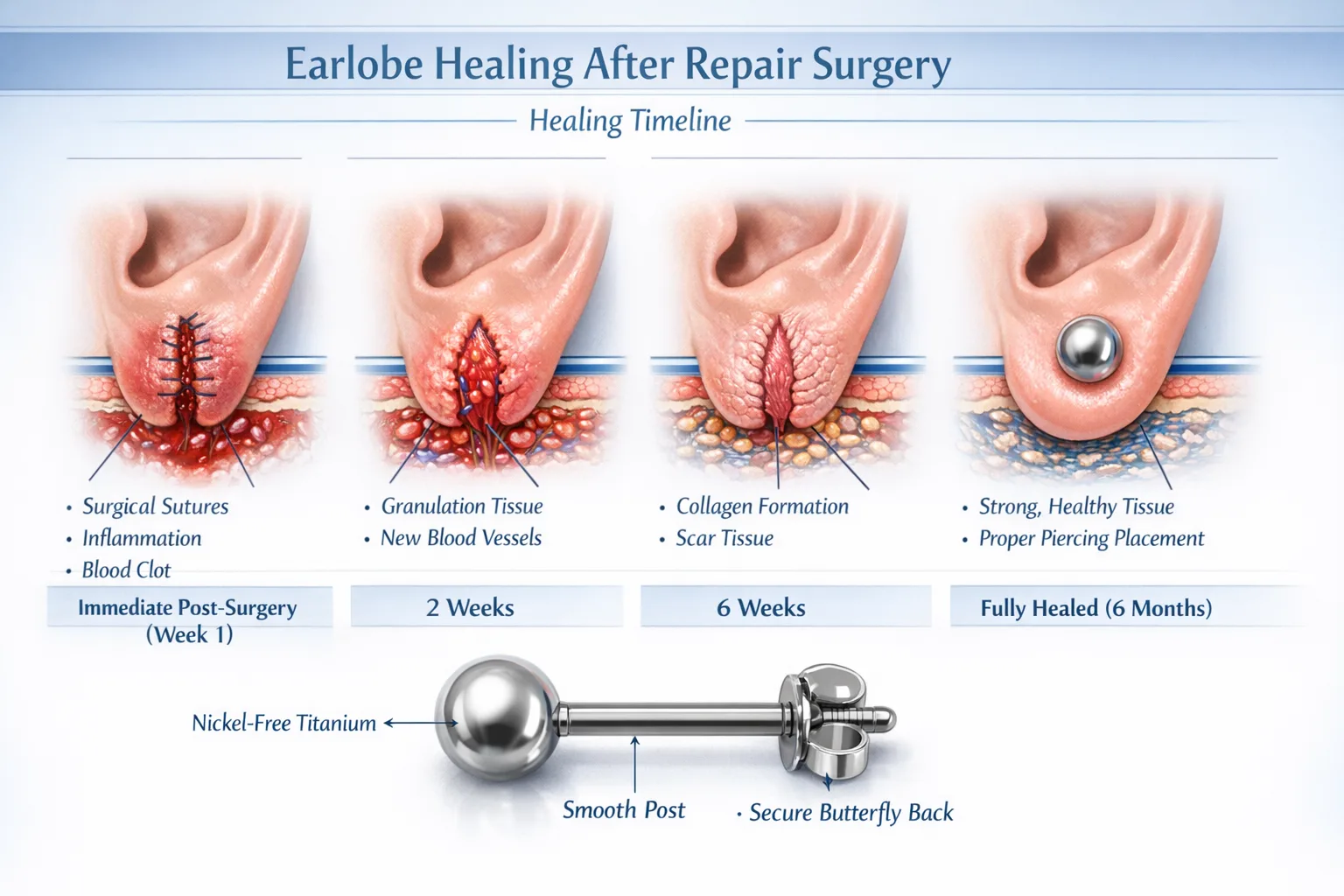
Earlobe repair surgery, also known as earlobe reconstruction or lobuloplasty, involves surgically correcting damaged, torn, or stretched earlobes. The procedure typically takes 30-60 minutes per earlobe and involves removing damaged tissue, reshaping the lobe, and carefully suturing the edges together to create a natural appearance.
The healing process follows distinct phases that determine when and what type of earrings can safely be worn:
Week 1-2: Initial Healing Phase
Week 3-6: Early Tissue Repair
Week 7-12: Intermediate Healing
Month 4-6: Advanced Healing
Similar to other minor surgical procedures, proper post-operative care significantly impacts final results. Just as patients need specific aftercare following various skin lesion removals, earlobe repair requires dedicated attention to healing protocols.
The repaired tissue is fundamentally different from original earlobe tissue. The surgical site contains:
Choosing inappropriate earrings during healing can lead to:
❌ Wound dehiscence (reopening of the surgical site) ❌ Keloid or hypertrophic scar formation ❌ Allergic reactions and contact dermatitis ❌ Infection requiring antibiotic treatment ❌ Need for revision surgery
The material composition of earrings directly impacts healing success. Certain metals and materials promote healing while others can trigger inflammatory responses that compromise surgical results.
1. Titanium (Grade 23 or Implant-Grade)
Titanium stands as the gold standard for post-surgical earring wear. This biocompatible metal is:
✅ Completely hypoallergenic and nickel-free ✅ Lightweight, reducing stress on healing tissue ✅ Corrosion-resistant and non-reactive with body fluids ✅ Used in medical implants and surgical instruments ✅ Available in various colors through anodization
Recommended timeline: Can be used for initial re-piercing at 6-8 weeks post-surgery
2. 14K or 18K Gold
Solid gold (not gold-plated) offers excellent biocompatibility:
✅ Naturally hypoallergenic when pure ✅ Doesn't tarnish or corrode ✅ Traditional choice for sensitive ears ✅ Available in yellow, white, and rose varieties
⚠️ Important: Ensure gold is at least 14K. Lower karat gold contains more alloy metals that may cause reactions. Avoid gold-plated or gold-filled options initially.
Recommended timeline: Safe for use 8-12 weeks post-surgery
3. Surgical Stainless Steel (316L or 316LVM)
Medical-grade stainless steel provides an affordable hypoallergenic option:
✅ Used in surgical instruments and implants ✅ Highly resistant to corrosion ✅ Durable and maintains polish ✅ Budget-friendly alternative to gold or titanium
⚠️ Caution: Some individuals with severe nickel allergies may still react to surgical steel, as it contains trace amounts of nickel (though tightly bound). Titanium remains the safest choice for those with known nickel sensitivity.
Recommended timeline: Suitable 8-12 weeks post-surgery for most patients
4. Niobium
This lesser-known metal offers similar benefits to titanium:
✅ Completely hypoallergenic ✅ Naturally occurring element ✅ Can be anodized to various colors ✅ Slightly softer than titanium but still durable
Recommended timeline: Safe for initial re-piercing at 6-8 weeks
🚫 Nickel and Nickel Alloys: The most common cause of metal allergies, nickel can trigger severe contact dermatitis, inflammation, and delayed healing.
🚫 Costume Jewelry: Contains unknown metal mixtures, often with high nickel content, plus coatings that flake and irritate tissue.
🚫 Sterling Silver: Tarnishes when exposed to body fluids, creating irritating compounds. Also too soft for secure posts.
🚫 Brass, Copper, and Bronze: Oxidize rapidly, causing green discoloration and potential allergic reactions.
🚫 Gold-Plated or Gold-Filled: The plating wears away quickly, exposing base metals underneath that may contain nickel or other allergens.
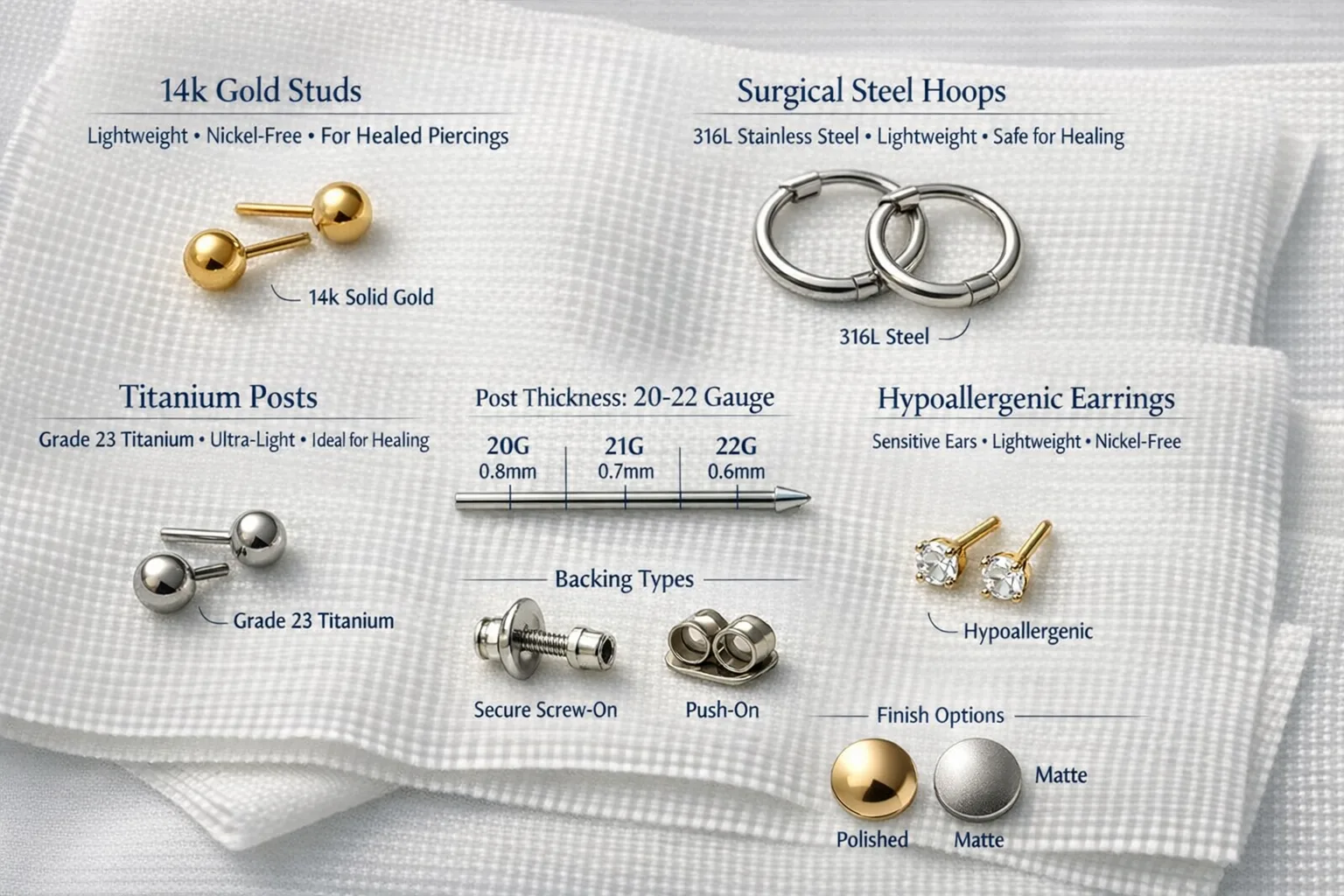
Beyond material selection, the style, weight, and design of earrings significantly impact healing outcomes and long-term success of earlobe repair.
Stud Earrings: The First Choice
Small, lightweight stud earrings represent the safest option for newly healed earlobes:
Benefits:
Recommended stud specifications:
Best stud backing types:
Small Hoop Earrings: Proceed with Caution
Thin, lightweight hoops may be introduced after 3-4 months:
Requirements for safe hoop wear:
⚠️ Wait at least 4-6 months before introducing hoops, as the circular shape can create rotational stress on the piercing channel.
Heavy Earrings
The very type of earrings that often necessitate earlobe repair surgery in the first place should be avoided for at least one year post-surgery:
🚫 Large chandelier earrings 🚫 Statement pieces over 5 grams 🚫 Heavy gemstone drops 🚫 Thick, chunky hoops
Why weight matters: Repaired tissue has approximately 80% of original tissue strength even after complete healing[1]. Excessive weight creates constant downward tension that can:
Dangling and Drop Earrings
While lighter than some statement pieces, dangling earrings create unique risks:
🚫 Movement causes friction in the piercing channel 🚫 Higher likelihood of catching on clothing, hair, or objects 🚫 Swinging motion creates variable stress on tissue 🚫 Difficult to secure during sleep or exercise
Recommended timeline: Wait 6-12 months before introducing lightweight dangles (under 4 grams)
Threader and Chain Earrings
These delicate styles pose specific challenges:
🚫 Thin chains can saw through healing tissue 🚫 Difficult to secure properly 🚫 Easy to pull accidentally 🚫 Often made from lower-quality metals
Recommended timeline: Wait at least 12 months, if at all
Sleeping
Exercise and Sports
Professional Settings
Following a structured timeline helps prevent complications while gradually returning to normal earring wear. Always consult with your surgeon before progressing to the next stage, as individual healing varies.
TimeframeHealing StageAllowed Earring TypesRestrictions0-6 weeksInitial healingNONE - No earrings permittedKeep surgical site clean and dry; follow all post-op instructions6-8 weeksRe-piercing possible (with approval)Titanium or niobium studs only, 3mm maxMust be performed by professional; surgeon approval required8-12 weeksEarly wear phaseSmall hypoallergenic studs (titanium, 14k gold, surgical steel)Under 2g weight; secure backs; remove nightly3-4 monthsGradual expansionSmall studs, tiny hoops (10-12mm)Under 3g weight; hypoallergenic materials only4-6 monthsModerate expansionVariety of studs, small hoops, very light dropsUnder 4g weight; avoid heavy pulls or catches6-12 monthsAdvanced healingMost lightweight stylesUnder 6g weight; still avoid very heavy pieces12+ monthsLong-term maintenanceBroader selection with cautionGradually test heavier styles; monitor for stretching
⚠️ Stop and consult your surgeon if you experience:
These symptoms may indicate infection, allergic reaction, or excessive stress on healing tissue. Remove the earrings immediately and seek medical evaluation.
While the timeline cannot be significantly shortened, certain practices support optimal healing:
✅ Maintain excellent hygiene: Clean earlobes and earrings daily with saline solution ✅ Avoid touching: Minimize handling except during cleaning ✅ Support nutrition: Adequate protein, vitamin C, and zinc support tissue repair ✅ Stay hydrated: Proper hydration aids all healing processes ✅ Avoid smoking: Nicotine constricts blood vessels and impairs healing ✅ Manage health conditions: Control diabetes, autoimmune conditions with medical guidance ✅ Follow-up care: Attend all scheduled post-operative appointments
Just as proper aftercare is essential following procedures at specialized facilities like The Minor Surgery Center, earlobe repair requires dedicated attention to post-operative protocols for optimal outcomes.
Proper maintenance of both earrings and earlobes ensures the longevity of surgical results and prevents complications that could necessitate revision procedures.
For the First 3 Months:
After 3 Months:
Proper earring care prevents contamination and maintains material integrity:
Storage Best Practices:
Cleaning Different Materials:
Titanium and Surgical Steel:
Gold:
Avoid:
Regular self-examination helps catch problems early:
Monthly Check:
Annual Professional Evaluation:
Patients who undergo various minor surgical procedures benefit from similar long-term monitoring to ensure optimal healing and prevent complications.
Contact your healthcare provider immediately if you experience:
🚨 Signs of infection (fever, severe pain, pus discharge) 🚨 Allergic reaction (severe itching, rash spreading beyond earlobe, difficulty breathing) 🚨 Trauma to the earlobe (tear, significant bleeding) 🚨 Embedded earring back (backing sinking into tissue) 🚨 Keloid formation (raised, growing scar tissue) 🚨 Persistent pain lasting more than a few days 🚨 Any reopening of the surgical repair site
Early intervention prevents minor issues from becoming major complications requiring additional surgery.
Yes, but timing and technique are critical:
Optimal Re-Piercing Timeline:
Re-Piercing Guidelines:
Never attempt self-piercing after earlobe repair surgery. The tissue architecture has changed, and professional assessment ensures safe placement that won't compromise surgical results.
Metal allergies, particularly to nickel, affect 10-20% of the population[2]. For those with confirmed sensitivities:
Best Options:
Testing for Allergies:
Managing Reactions:
Similar to how patients need to consider individual sensitivities when selecting treatments at skin cancer clinics, earring selection must account for personal allergies and sensitivities.
The answer depends on several factors:
Factors Determining Heavy Earring Tolerance:
Safe Approach to Heavy Earrings:
Maximum Recommended Weights:
Reality check: If heavy earrings caused the original damage requiring surgery, long-term wear of similar weights will likely cause recurrent problems. Consider lifestyle changes to protect your investment in surgical repair.
Magnetic earrings offer an alternative for those unable to wear traditional pierced styles:
Advantages: ✅ No piercing required ✅ Easy to remove ✅ Can be worn during early healing (with surgeon approval) ✅ Eliminate risk of embedded backs
Disadvantages: ❌ May not hold heavy designs securely ❌ Can pinch tissue if too strong ❌ May fall off unexpectedly ❌ Limited style selection ❌ Magnets may interfere with medical devices (pacemakers, hearing aids)
Best Practices for Magnetic Earrings:
Pregnancy presents unique considerations:
Timing Surgery:
Earring Wear During Pregnancy:
Post-Pregnancy:
Selecting the best earrings to wear after earlobe repair surgery represents a crucial component of successful surgical outcomes. The careful progression from no earrings during initial healing, to hypoallergenic studs, and eventually to a broader range of styles ensures that repaired earlobes maintain their integrity and appearance for years to come.
Key principles for success:
🔑 Patience is paramount: Rushing the healing process or introducing inappropriate earrings too early can undo surgical correction and necessitate revision procedures.
🔑 Material matters: Investing in high-quality, hypoallergenic materials like titanium, solid gold, or surgical steel prevents allergic reactions and supports optimal healing.
🔑 Weight consciousness: Permanently modifying earring choices to favor lightweight options protects against recurrent stretching and tearing.
🔑 Consistent care: Daily cleaning, proper storage, and regular monitoring ensure long-term success and early detection of potential problems.
🔑 Professional guidance: Working closely with your surgeon and following individualized recommendations accounts for your specific surgical technique and healing characteristics.
If you're preparing for earlobe repair surgery:
If you've recently had earlobe repair:
If you're months post-surgery:
For ongoing earlobe health:
The journey from damaged earlobes through surgical repair to safely wearing beautiful earrings again requires dedication and informed decision-making. By prioritizing tissue health over fashion trends and following evidence-based guidelines for the best earrings to wear after earlobe repair surgery, patients can enjoy both aesthetic satisfaction and long-term structural integrity of their earlobes.
For those considering earlobe repair or other minor surgical procedures, consulting with experienced professionals at facilities like The Minor Surgery Center ensures access to expert care and comprehensive post-operative guidance. Whether addressing earlobe concerns or other dermatological issues, professional expertise combined with patient commitment to proper aftercare delivers optimal outcomes that stand the test of time.
Remember: your earlobes have undergone significant surgical intervention to restore their appearance and function. Treating them with care, selecting appropriate jewelry, and following medical guidance protects this investment and allows you to confidently wear earrings for years to come.
[1] Brent, B. (2002). "Earlobe reconstruction with an auriculomastoid flap." Plastic and Reconstructive Surgery, 110(5), 1551-1557.
[2] Thyssen, J. P., & Menné, T. (2010). "Metal allergy—a review on exposures, penetration, genetics, prevalence, and clinical implications." Chemical Research in Toxicology, 23(2), 309-318.