

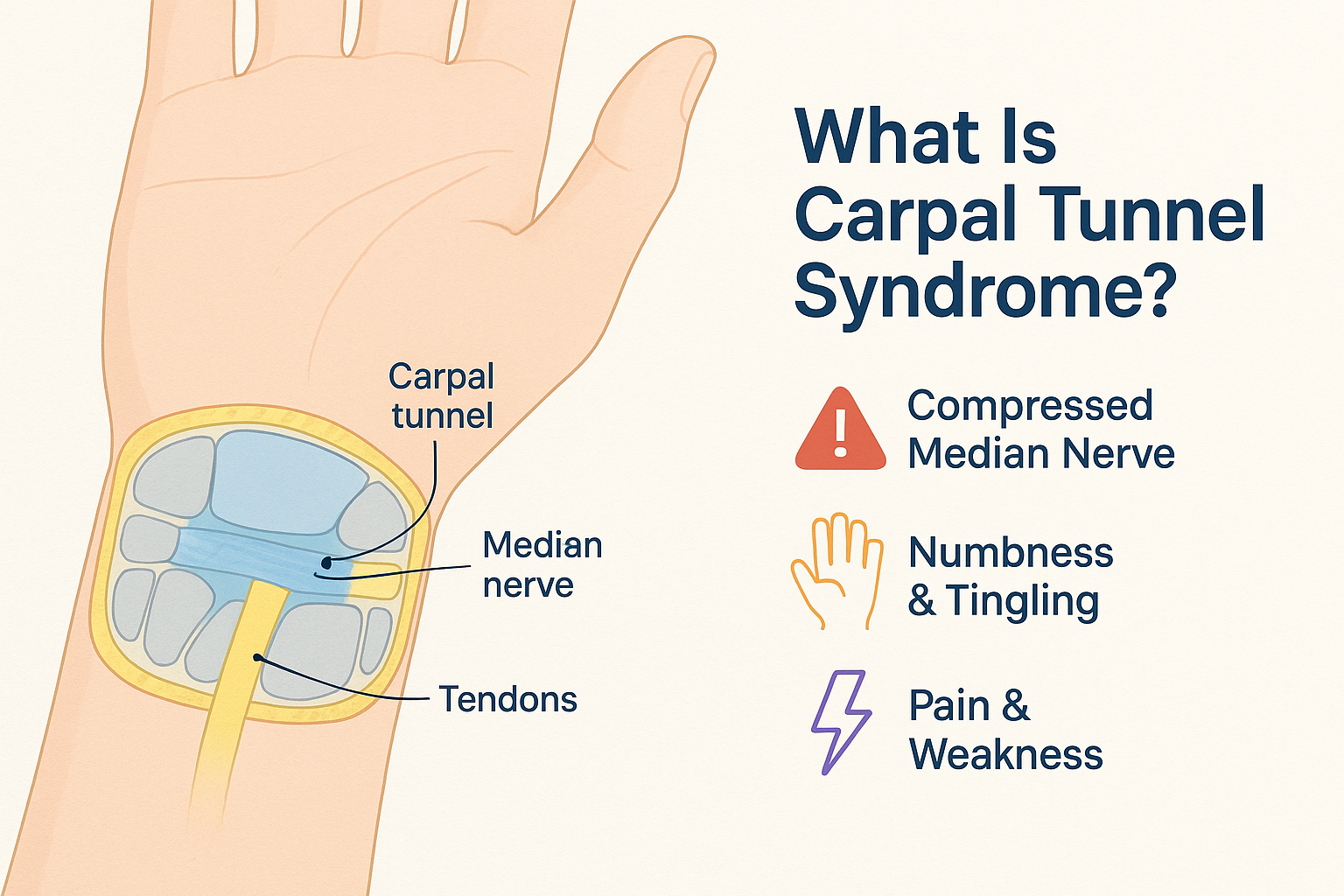
Think of your wrist like a busy tunnel during rush hour. The carpal tunnel is a narrow passageway in your wrist—formed by bones and ligaments—that houses your median nerve and nine tendons. When inflammation or swelling occurs, that tunnel gets even tighter, pinching the median nerve that runs through it[1].
The median nerve is crucial. It controls sensation in your thumb, index finger, middle finger, and part of your ring finger. It also powers the muscles at the base of your thumb.
When that nerve gets squeezed, you experience the classic symptoms: numbness, tingling, burning sensations, and eventually pain that can shoot up your forearm[3].
Several factors can contribute to developing this condition:
The good news? Understanding the cause helps guide your treatment approach.
Carpal tunnel syndrome typically starts gradually. You might notice:
Here's what matters: these symptoms don't just disappear on their own. Without treatment, they typically worsen over time[3].
Let's be direct: waiting doesn't help. In fact, untreated carpal tunnel syndrome can lead to permanent nerve damage and muscle wasting at the base of your thumb[3].
When you catch symptoms early, non-surgical treatments are often highly effective. Your body responds better, recovery is faster, and you avoid the complications that come with advanced nerve compression[2][4].
Think of it like resetting the clock on this discomfort before it becomes a permanent fixture in your life.
Early Stage (Weeks to Months)
Moderate Stage (Months)
Advanced Stage (Months to Years)
The message is clear: the earlier you seek treatment, the more options you have and the better your outcomes.
Before we talk about surgery, let's explore conservative approaches. For many people—especially those who catch symptoms early—these treatments provide significant relief[2][4].
Physiotherapy is highly effective in managing chronic carpal tunnel syndrome by relieving symptoms, improving wrist strength, and enhancing functionality[1].
A comprehensive physiotherapy program typically includes:
Manual Therapy Techniques Your physiotherapist uses hands-on techniques to:
Therapeutic Exercises Specific stretches and strengthening exercises help:
Modality Treatments Advanced therapies can accelerate healing:
Wearing a wrist splint—especially at night—keeps your wrist in a neutral position and reduces pressure on the median nerve[2].
Here's why this works: during sleep, many people unconsciously flex their wrists, which increases pressure in the carpal tunnel. A splint prevents this.
Splinting guidelines:
Adjusting your workstation and daily habits reduces strain on your wrist during activities and recovery[1][2].
Practical changes that help:
✅ Keyboard position: Keep your keyboard at elbow height with wrists straight ✅ Mouse placement: Use an ergonomic mouse and keep it close to your keyboard ✅ Monitor height: Eye level to prevent hunching and wrist strain ✅ Frequent breaks: Take 5-minute breaks every hour to stretch and rest your hands ✅ Proper posture: Sit with shoulders relaxed and elbows at 90 degrees
These modifications aren't just helpful during treatment—they prevent recurrence.
Over-the-counter options:
Corticosteroid injections:
Let's talk about when surgical intervention makes sense. If you've tried conservative treatments for several months without adequate relief, or if your symptoms are severe with muscle wasting, surgery often provides the most effective long-term solution.
Carpal tunnel release surgery is one of the most common and successful procedures performed today. The goal is simple: relieve pressure on your median nerve by cutting the ligament that forms the roof of the carpal tunnel.
The procedure itself is straightforward. Your surgeon makes a small incision and cuts the transverse carpal ligament, which immediately releases pressure on the median nerve.
There are two main approaches:
Open Release Surgery
Endoscopic Release Surgery
Both approaches are safe and effective. The choice depends on your specific anatomy, surgeon expertise, and personal preferences.
When you're looking for the Best Carpal Tunnel Treatment In Mississauga, The Minor Surgery Center stands out for several important reasons.
Expert Outpatient Care No hospital hassles. No lengthy wait times. You receive focused, efficient care in a comfortable outpatient setting designed specifically for minor surgical procedures.
Experienced Surgical Team Our surgeons specialize in carpal tunnel release and perform these procedures regularly. Experience matters—it translates to better technique, fewer complications, and optimal outcomes.
Minimally Invasive Solutions We prioritize techniques that minimize tissue trauma, reduce scarring, and speed your recovery. You get effective treatment without unnecessary invasiveness.
Comfort-First Approach From your initial consultation through post-operative care, we focus on your comfort and peace of mind. We explain clearly, answer all your questions, and ensure you feel confident every step of the way.
Personalized Treatment Plans No two patients are identical. Your treatment plan reflects your specific symptoms, lifestyle needs, and recovery goals. We listen, assess thoroughly, and customize our approach for you.
Learn more about our comprehensive approach to conditions including carpal tunnel syndrome.
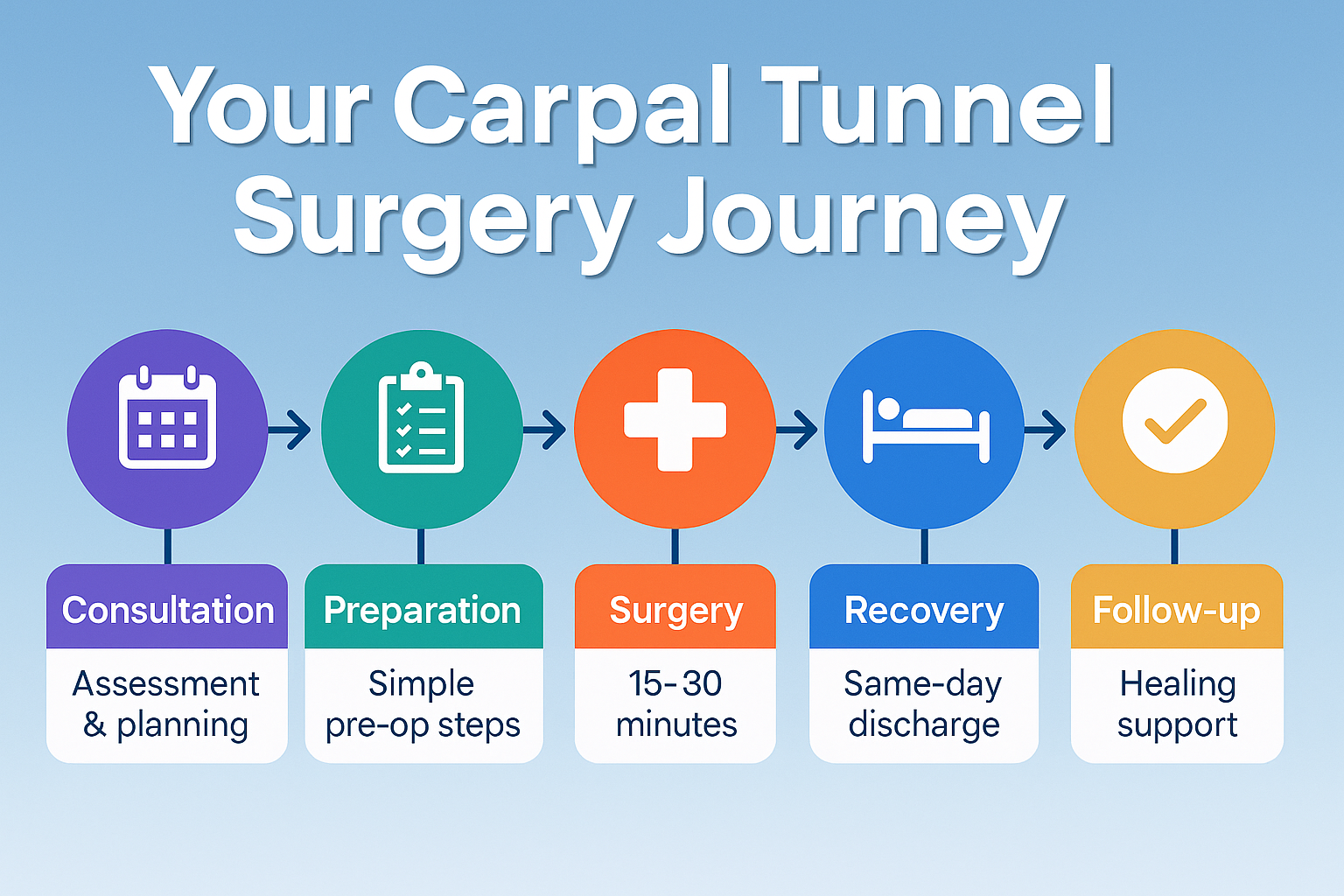
Understanding the process removes uncertainty and helps you prepare. Here's what happens when you choose surgical treatment at The Minor Surgery Center.
Your journey starts with a thorough assessment. Your surgeon will:
This is your opportunity to express concerns, understand the procedure fully, and make an informed decision. We encourage questions—there's no such thing as a silly question when it comes to your health.
Once you decide to proceed, preparation is simple:
📋 Before Surgery:
The procedure is typically performed under local anesthesia with optional light sedation. You're comfortable throughout, and the entire process usually takes 15-30 minutes.
Here's what happens in the operating room:
You won't feel pain during the procedure. Some patients report feeling pressure or tugging sensations, but nothing uncomfortable.
After surgery, you'll:
Your hand will be bandaged, and you'll likely wear a supportive splint initially. Most people experience immediate relief from the pre-surgery tingling and numbness, though surgical site tenderness is normal.
Recovery from carpal tunnel release surgery is typically faster and easier than most people expect. With proper care and guidance, you'll progress from initial healing to full function in a matter of weeks.
First 24-48 Hours
Week 1-2
Week 2-4
Week 4-8
Month 2-3
Recovery time varies depending on condition severity and individual factors, with many patients experiencing significant improvement within several weeks to a few months with consistent treatment adherence[4].
Your surgical team will guide you through appropriate exercises at each stage. Here are examples:
Early Phase (Days 1-7)
Strengthening Phase (Weeks 2-6)
Advanced Phase (Weeks 6+)
Consistency is key. Regular, gentle exercise promotes healing and prevents stiffness.
Do's: ✅ Follow all post-operative instructions carefully ✅ Attend all follow-up appointments ✅ Communicate any concerns to your surgical team immediately ✅ Gradually increase activity as directed ✅ Practice patience—healing takes time ✅ Maintain good nutrition to support tissue repair
Don'ts: ❌ Rush your recovery or ignore pain signals ❌ Lift heavy objects before cleared by your surgeon ❌ Get the incision wet until fully healed ❌ Skip exercises or physical therapy sessions ❌ Return to high-impact activities prematurely ❌ Ignore signs of infection or complications
Choosing between conservative and surgical treatment depends on several factors. Let's break down the considerations to help you make an informed decision.
FactorConservative TreatmentSurgical TreatmentBest forMild to moderate symptoms, early-stage casesModerate to severe symptoms, failed conservative treatmentTimeline to reliefWeeks to monthsOften immediate relief from tingling/numbnessRecovery periodOngoing management2-3 months to full recoverySuccess rate60-70% for early cases90-95% long-term successRecurrenceHigher if underlying causes persistLow (under 5%)InvasivenessNoneMinimally invasive outpatient procedureCostLower initial cost, ongoing expensesHigher upfront, typically one-timeTime commitmentRegular therapy sessions over monthsSingle procedure plus follow-ups
Consider surgical treatment if you:
Start with non-surgical approaches if you:
The good news? You don't have to choose alone. Our experienced team helps you evaluate your specific situation and recommends the approach most likely to succeed for you.
Let's address the practical questions: What does treatment cost? Is it covered by insurance? How do you plan for this?
Treatment costs vary based on several factors:
Conservative Treatment Costs:
Surgical Treatment Costs:
At The Minor Surgery Center, we believe in transparent pricing. Use our cost estimator to get a clear understanding of what to expect, or visit our pricing page for detailed information.
Most insurance plans cover carpal tunnel treatment when medically necessary:
Typically Covered:
Documentation Requirements:
We work with most major insurance providers and help you navigate coverage questions. Our administrative team can verify your benefits before treatment begins.
Questions to ask during consultation:
💭 What treatment approach do you recommend for my specific case? 💭 What are the expected outcomes and timeline? 💭 What are the risks and potential complications? 💭 What will my recovery look like? 💭 When can I return to work and normal activities? 💭 What's the total cost, and what does my insurance cover? 💭 What happens if symptoms return?
Visit our FAQs page for answers to common questions, or contact us directly to discuss your specific situation.
Convenience isn't just about comfort—it affects your treatment outcomes. When you're managing a hand condition, traveling long distances for appointments becomes challenging.
The Minor Surgery Center's Mississauga location offers:
Accessibility
Community Connection
Comprehensive Regional Coverage
While our Mississauga clinic serves as a primary location for carpal tunnel treatment, we also maintain clinics throughout the Greater Toronto Area for your convenience:
View all our clinic locations to find the most convenient option for you.
"I had been dealing with carpal tunnel pain for over a year. The team at The Minor Surgery Center was professional, caring, and efficient. My surgery was quick, recovery was smooth, and I'm finally pain-free. I wish I hadn't waited so long!" — Sarah M., Mississauga
Read more patient reviews and testimonials to hear about real experiences and outcomes.
Whether you're recovering from treatment or trying to prevent carpal tunnel syndrome, these strategies help protect your wrists and hands for the long term.
Optimize your workspace:
🖥️ Computer setup
⌨️ Typing technique
🖱️ Mouse use
During work:
At home:
General health:
Daily wrist stretches (hold each 15-30 seconds):
Strengthening exercises (2-3 times per week):
Consistency matters more than intensity. Gentle, regular exercise keeps your wrists healthy.
Certain populations have specific considerations when dealing with carpal tunnel syndrome.
Pregnancy-related carpal tunnel syndrome is common due to fluid retention and hormonal changes. Good news: symptoms often resolve after delivery.
Management during pregnancy:
People with diabetes are at higher risk for carpal tunnel syndrome and may experience different progression patterns.
Important considerations:
If your carpal tunnel syndrome resulted from workplace activities, you may be eligible for Workplace Safety and Insurance Board (WSIB) coverage.
Key points:
Many people develop carpal tunnel syndrome in both hands, though often one is worse than the other.
Treatment approach:
You've learned about carpal tunnel syndrome, explored treatment options, and understand what makes The Minor Surgery Center the Best Carpal Tunnel Treatment In Mississauga option. Now it's time to take action.
If you're experiencing symptoms:
If you've already tried conservative treatment:
Ready to get back to your life without the constant tingling, numbness, and pain? Contact The Minor Surgery Center today.
What to expect at your first visit:
Bring these questions to your consultation:
📝 Based on my symptoms, what stage of carpal tunnel syndrome do I have? 📝 What treatment approach do you recommend, and why? 📝 What are my chances of success with this treatment? 📝 What's the expected timeline for improvement? 📝 What are the risks and potential complications? 📝 What will recovery look like for my specific situation? 📝 When can I return to work and my normal activities? 📝 What can I do to prevent recurrence?
Continue learning about your condition and treatment options:
Carpal tunnel syndrome doesn't have to control your life. Whether you're waking up with numb fingers, struggling to grip your coffee cup, or dealing with constant tingling that affects your work—effective treatment is available.
The Best Carpal Tunnel Treatment In Mississauga combines expert medical care with a personalized, compassionate approach that puts you first. At The Minor Surgery Center, we specialize in safe and efficient surgery delivered with a comfort-first approach by an experienced surgical team.
We understand that you're not just a case—you're a person with a life to get back to. Whether you need conservative management or minimally invasive surgical release, we're here to help you achieve lasting relief.
Your next steps are simple:
Don't let carpal tunnel syndrome steal another night's sleep or make you drop another cup. The solution is closer than you think—right here in Mississauga.
Contact us today to schedule your consultation and take the first step toward relief.
[1] Physiotherapy effectiveness in chronic carpal tunnel syndrome management, including manual therapy techniques, therapeutic exercises, and ergonomic modifications for symptom relief and functional improvement.
[2] Comprehensive physiotherapy approaches for carpal tunnel syndrome, incorporating electrotherapy, laser therapy, ultrasound, splinting, and individualized treatment plans based on thorough assessment.
[3] Carpal tunnel syndrome pathophysiology, symptoms (numbness, tingling, burning, pain in thumb through ring finger), median nerve compression mechanism, and importance of early intervention to prevent permanent damage.
[4] Non-surgical treatment effectiveness when initiated early, recovery timelines varying by severity and individual factors, with significant improvement typically within weeks to months with consistent treatment adherence.